
Lyon, world capital of gastronomy
Lyon did not steal its title. Crowned« World capital of gastronomy »in 1935 by the food critic Curnonsky, the city has deserved it every day since. Between its century-old bouchons, its radiant Halles, the heritage of the Mothers of Lyon and numerous incredible chefs like Paul Bocuse, Lyon embodies a living culinary tradition, driven by exceptional producers and passionate artisans. This guide gives you the keys to understand, but also to taste, what makes Lyon a unique city in the gastronomic world.
1925-1935: how Lyon became the capital of gastronomy
In 1925, the gastronome Maurice Edmond Sailland, known as Curnonsky, elected «Prince of Gastronomes» by 3,338 chefs and restaurateurs, publishes: Gastronomic France, a culinary tour of France in 28 volumes. Upon arriving in Lyon, he could no longer find a superlative strong enough: «Lyon, we do not hesitate to say it, to write it, to proclaim it, is the gastronomic capital of the world.»
He definitively established this title, which he forged, in 1935 in a work co-authored with the Lyon journalist Marcel Grancher, simply entitled Lyon, world capital of gastronomy. Since then, no other city in the world can claim this title with as much legitimacy.
The reason for this recognition? Lyon's unique geographical position, crossroads of France's finest terroirs Bresse poultry, Côte-Rôtie and Beaujolais wines, Dauphiné cheeses, pike and carp from the Dombes, Ventoux truffles, vegetables from the Rhône valley. Lyon does not produce everything, but concentrates the best of everything.
The Mothers of Lyon: The women who invented haute cuisine
Before the media-featured starred chefs, before cooking shows and Michelin guides, there was the Lyon Mothers. These women of modest background were often former cooks from bourgeois households who had been laid off after the 1929 crisis. They eventually opened their own dining rooms and invented a cuisine based on fresh ingredients that was simple, generous, and irreproachable.
La Mère Fillioux, the Mother of Mothers
Françoise Fayolle, known as Mère Fillioux (1865-1925), is the first to establish the reputation of the Mothers of Lyon. Located on Rue Duquesne in the 6th arrondissement, it served the same menu for three decades: creamy truffle soup, poularde demi-deuil (a chicken with truffle slices placed under the skin), gratinéeed quenelles, artichoke bottom with foie gras, praline ice cream... All without ever lacking clientele. She is the one who trains Mère Brazier, transmitting a gestural language and a level of exacting standards that would span the century.
La Mère Brazier, the first three-star chef in history
Eugénie Brazier (1895-1977) is the most emblematic figure of this tradition. Born in the Ain department, an unwed mother at 19, she arrived in Lyon in 1914 and opened her first restaurant at 12 rue Royale in 1921. In 1933, she became the first person to win three Michelin stars in two establishments simultaneously an achievement that would not be equaled until 64 years later by a man, Alain Ducasse. Among her apprentices would be Paul Bocuse: it is Mère Brazier who taught him rigor, a love for the product, and the fundamentals of Lyon cuisine.
A living heritage
The Mothers of Lyon are not a closed chapter of history. The Mother Léa (Léa Bidaut), the Mother Richard (whose cheese shop still exists in the Halles Paul Bocuse) and many others have perpetuated this simple and traditional cuisine. Today, the La Mère Brazier restaurant, taken over in 2008 by Mathieu Viannay (Meilleur Ouvrier de France), continues to serve the "poularde demi-deuil" and the artichoke bottom with foie gras as a tribute to Eugénie.
Paul Bocuse: The Pope of Gastronomy
Born in Collonges-au-Mont-d’Or in 1926, Paul Bocuse comes from a family of chefs dating back to the 17th century. Trained by La Mère Brazier and then by Fernand Point in Vienne, he earned his first Michelin star in 1958, his second in 1962, and his third in 1965. He will keep his 3 stars for 53 years, until his death in January 2018.
Named« Chef of the Century »by Gault & Millau, creator of the Bocuse d'Or (the most prestigious global culinary competition, founded in Lyon in 1987), Bocuse made Lyon an international gastronomic reference. In his honor, the Halles of Lyon bearing his name since 2006. His monumental mural still watches over Cours Lafayette, facing the covered market he frequented every morning.
Lyonnais specialties you absolutely must know
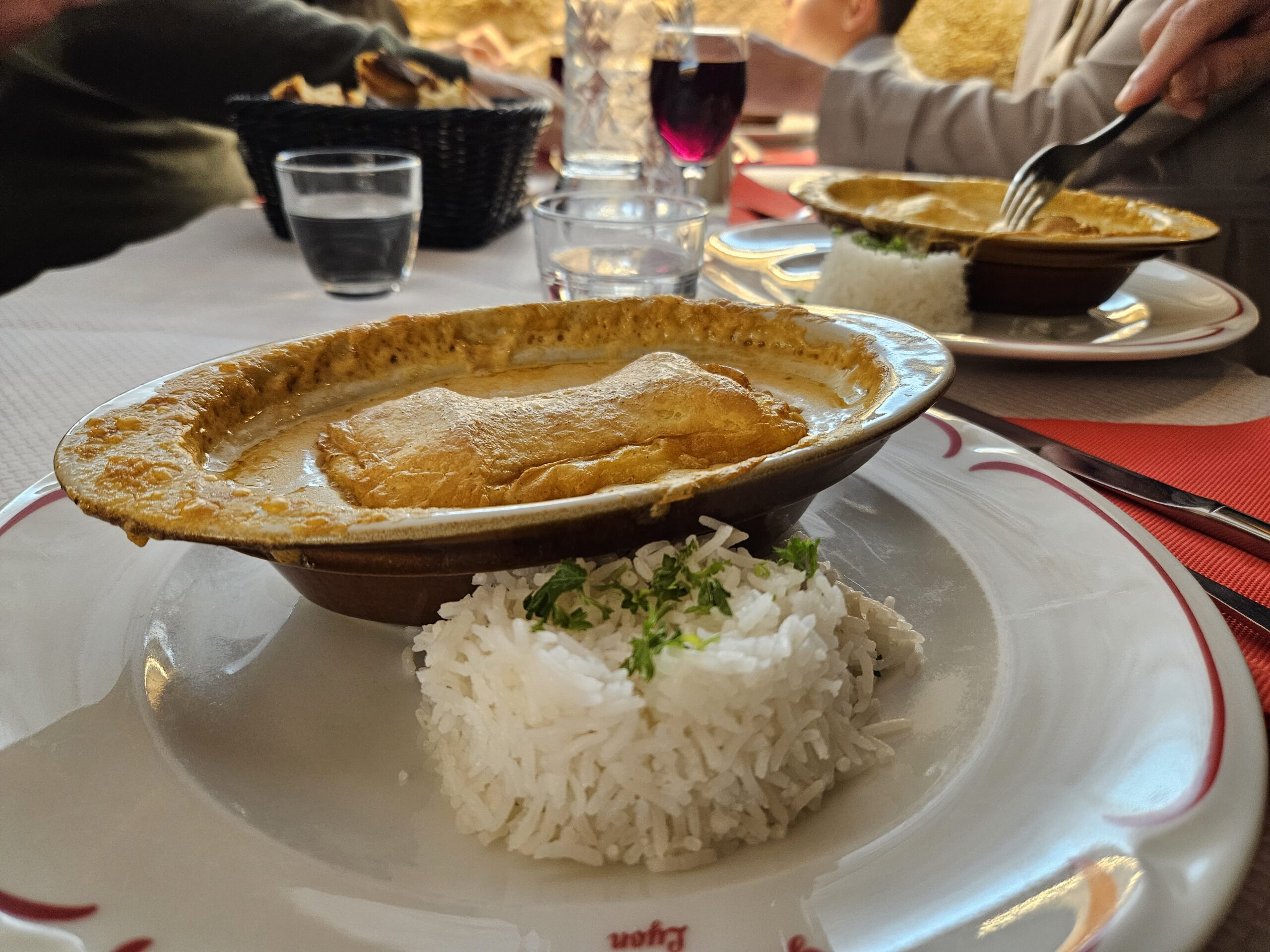
Lyon's cuisine offers must-try dishes. These are dishes born of the local soil, the genius of the Lyon mothers, and above all that had to be simple yet delicious in order to satisfy the Lyon food lovers accustomed to eating well. Here are the most important ones to know:
The quenelle
Probably the most iconic dish in Lyon. A sort of very light choux pastry, soft, incorporating pike meat, and most often coated with a Nantua crayfish sauce. It really has nothing to do with its industrial version! In Lyon, several artisans still shape it by hand.
The fattened chicken in half-mourning
Invention of Mère Fillioux, perpetuated by Mère Brazier and then by Paul Bocuse: a Bresse poultry in which of the black truffle slices are slid under the skin before cooking. The visual contrast (white and black) earned it its name. An exceptional dish that tells the whole story of Lyon gastronomy.
Sapeur's apron
Beef tripe marinated, breaded and grilled. A typical "bouchon" dish, generous and uncompromising. Its name is said to come from the soldiers of the Military Engineering Corps, whose leather aprons resembled the thick breading that covers the cut.
The pink praline tart
Bright pink sugar-coated almonds, crushed and mixed with cream, on a crispy shortcrust pastry. Impossible to leave Lyon without having eaten a slice. Every baker has their recipe, every Lyonnais has their favorite.
The rosette and the cooking sausage
The rosette is an exceptional dry sausage, cured in a natural casing. The cooking sausage eaten warm, poached, often served with a vinaigrette or wrapped in brioche (saucisson brioché). Two pillars of Lyon charcuterie, essential in any self-respecting bouchon.
Saint-Marcellin
It is the most consumed cheese in Lyon. Under the Halles Paul Bocuse, the Mère Richard cheese dairy has become famous for its aging process that makes it runny, almost liquid, which is called «Lyonnaise style». It has become a global benchmark for soft cheese. An absolute must.
The "bouchon lyonnais": understanding the soul of Lyon's cuisine
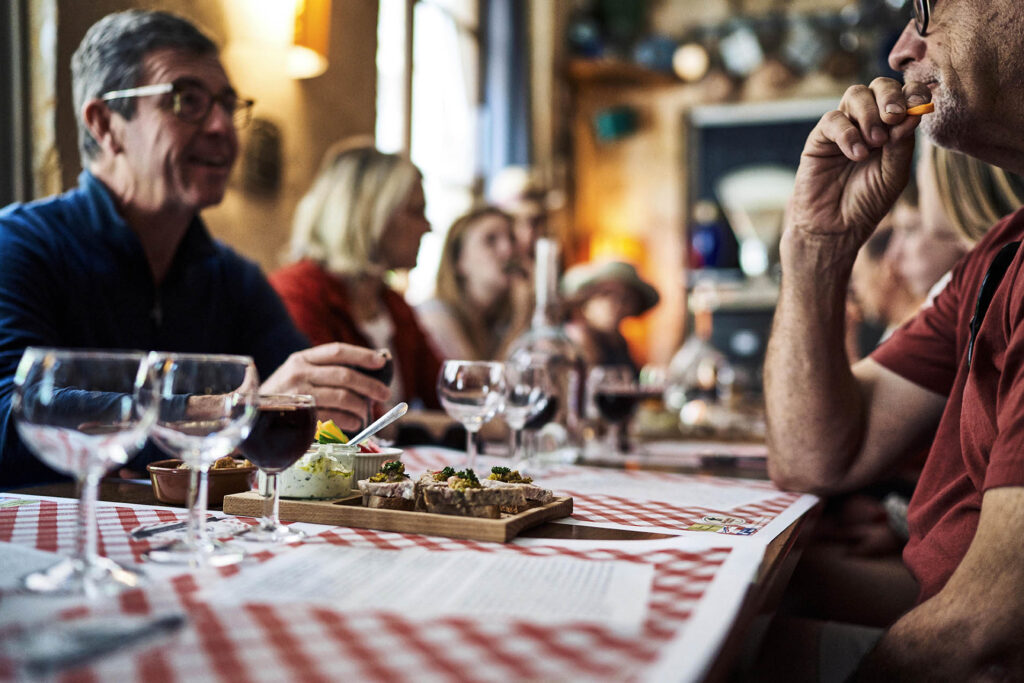
The bouchon is at the heart of Lyon's gastronomic identity. These typical restaurants with checkered tablecloths, a friendly atmosphere, and generous portions were born in the 19th century. They were frequented first by the silk workers (the Canuts) and by the Journeymen of the Tour de France.
Today, a official certification of the «Les Bouchons Lyonnais» association guarantees the authenticity of certain establishments: homemade cuisine, local products, short menu. It is the label that distinguishes real bouchons from tourist imitations. Our guides know the addresses that are truly worth the detour.
Les Halles Paul Bocuse: the most foodie market in France
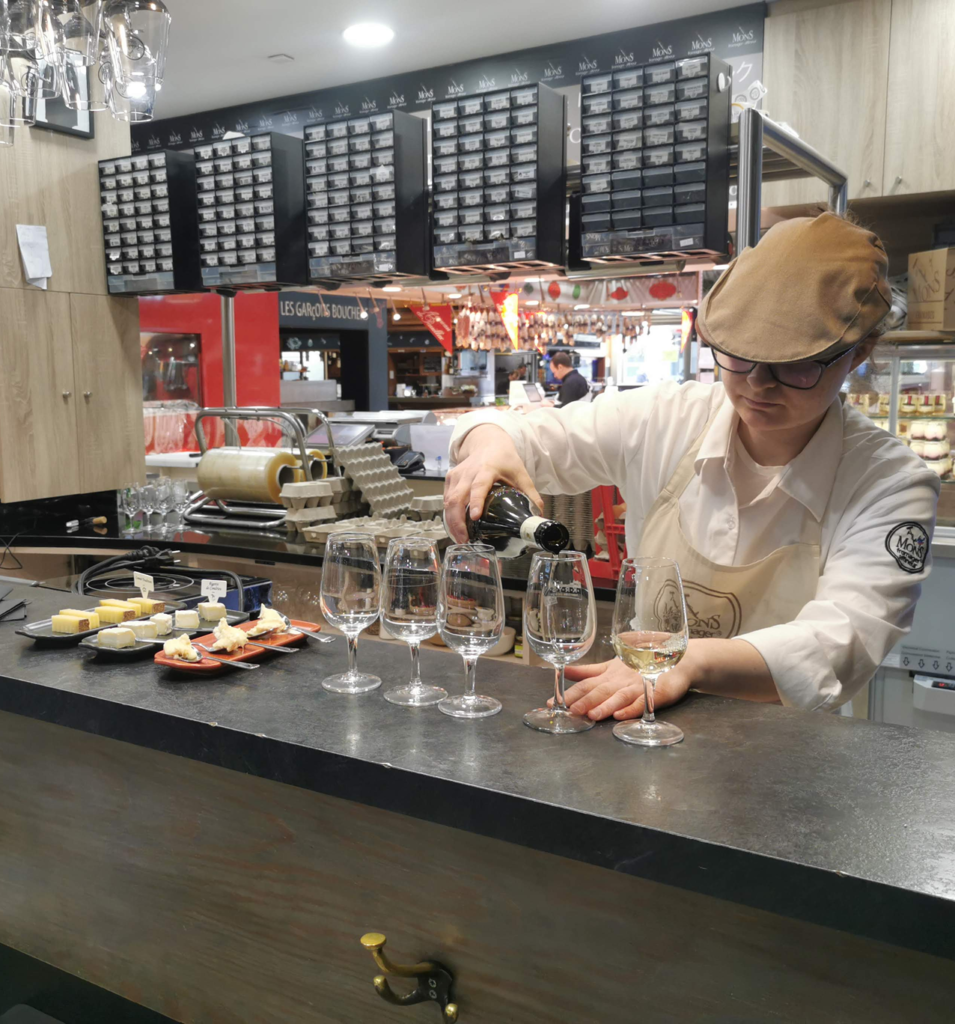
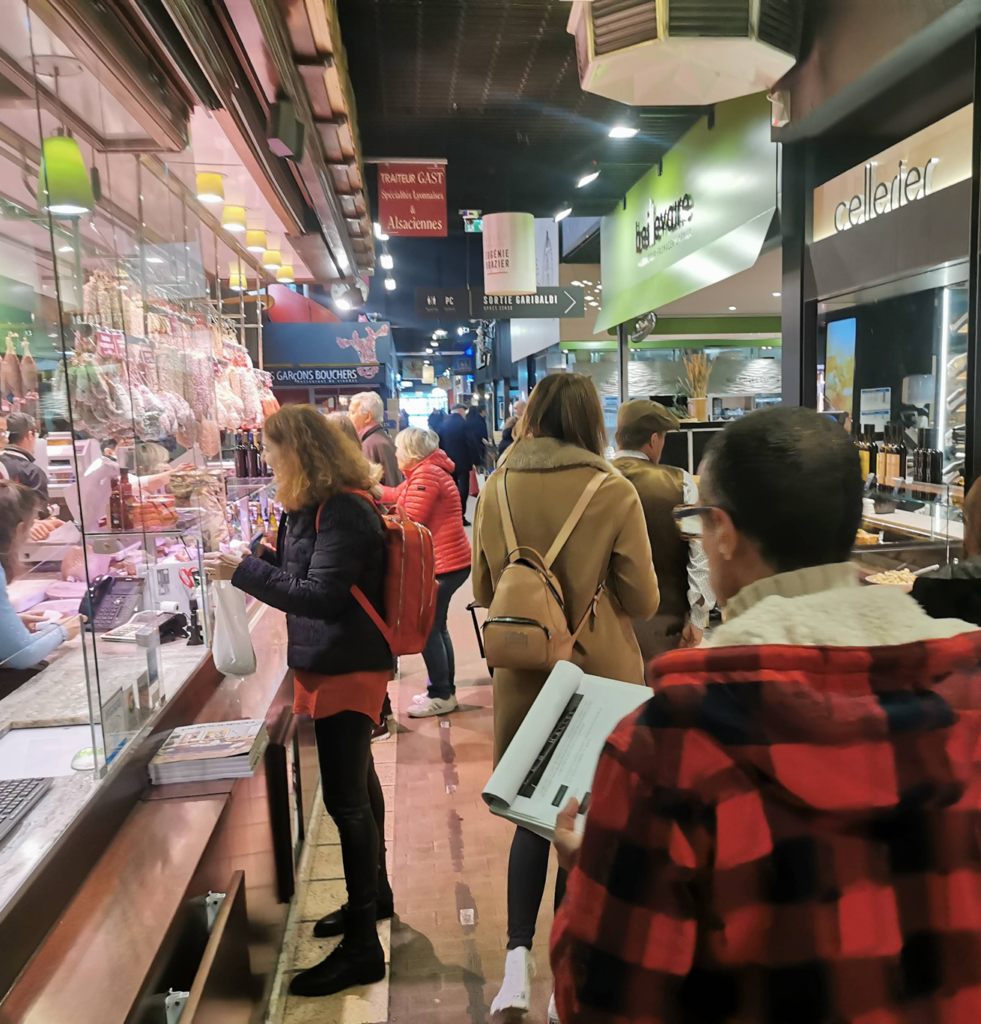
At 102 Cours Lafayette, in the Part-Dieu district, Les Halles Paul Bocuse bring together the best artisans of Lyon under one roof. 13,500 m², over 50 artisans and merchants, including several Meilleurs Ouvriers de France: you will find cheesemongers, pork butchers, fishmongers, pastry chefs, and chocolatiers.
Paul Bocuse himself bought his supplies there every morning. The Halles have borne his name since 2006, in recognition of a lifetime dedicated to defending local producers and artisans.
The unique geographical location of Lyon:
an exceptional terroir within reach
If Lyon is the capital of gastronomy, it is also because’she is surrounded by the finest terroirs from France – and therefore the products that come from it! Within a radius of 100 km are located:
Bresse poultry
The best poultry in the world, 60 km from Lyon. Free-range chickens, fattened chickens, and capons raised according to strict specifications since the 17th century.
🍷 Beaujolais and Côtes du Rhône
To the north, the vineyards of Beaujolais and its 10 little-known crus. To the south, Côte-Rôtie, Condrieu, and Saint-Joseph, which are among the greatest wines in France.
Cheeses of Dauphiné
Saint-Marcellin, Saint-Félicien, Bleu du Vercors, soft cheeses of rare richness, aged by exceptional cheesemongers such as Mère Richard at the Halles.
🥩 Lyonnais cured meats and charcuterie
Rosette de Lyon, saucisson de Lyon, Jésus, saucisson à cuire... Lyon's cured meats are an institution. Artisans like Bobosse or Sibilia perpetuate a centurylong know-how, ranked among the best in France.
🍑 Fruits and vegetables from the Monts du Lyonnais
Local market gardeners supply the city's markets—Saint-Antoine, Croix-Rousse—every morning with impeccably fresh seasonal fruits and vegetables.
 Carp and pike from the Dombes
The Plateau des Mille Étangs, 30 km from Lyon, has supplied the freshwater fish used in traditional quenelles for centuries.
Experience Lyon's gastronomy with a passionate local guide
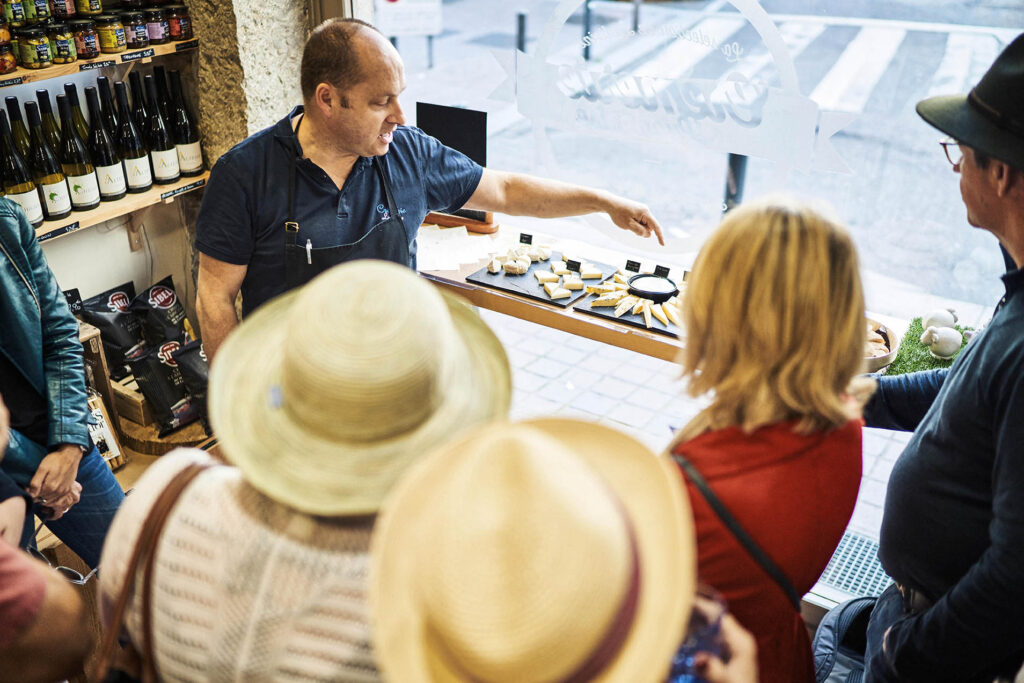
Reading about Lyon's gastronomy is one thing. Experiencing it is something else. At Lyon Food Tour, our guides are passionate locals, some historians, others sommeliers, all in love with their city. They take you to the places they frequent themselves, in groups limited to 12 people to guarantee an authentic and friendly experience.
FAQ on Lyonnaise gastronomy
Why is Lyon called the capital of gastronomy
The title was coined in 1925 by the food critic Curnonsky and made official in his 1935 book co-written with the Lyon journalist Marcel Grancher. It relies on the unique combination of an exceptional terroir, a culinary tradition carried on by the Mothers of Lyon, and a concentration of talent rarely equaled elsewhere in France.
What is a bouchon lyonnais?
A bouchon is a typical restaurant in Lyon, characterized by traditional homemade cuisine, local products, generous portions, and a friendly atmosphere. Official certification from the «Les Bouchons Lyonnais» association guarantees the authenticity of certain establishments against tourist imitations.
What is a pot lyonnais?
A «pot lyonnais» is a wine pitcher with a capacity of 46cl (and not 50cl). Its origin comes from the Canuts (silk workers) who saw their capacity reduced over time. At the time, the bosses included daily wine in the wages. To save money, they decided to enlarge the «bottom of the bottle» in order to serve less wine. Every 2 pots instead of serving 1L, they served only 2x46cl, which is 92cl. 8cl gained, which was nicknamed "the boss's glass." A tradition that has remained on the tables of Lyonnais bouchons.
When to visit the Halles Paul Bocuse?
Les Halles are open from Tuesday to Saturday from 7 a.m. to 7 p.m. (restaurants until 10:30 p.m.) and on Sunday from 7 a.m. to 1 p.m. The best time to go is weekday mornings, when all the artisans are there and the atmosphere is at its best. On weekends, it is very busy, but it is lively!
To go further
 The best Lyonnaise bouchons
Our selection of authentic addresses, far from the tourist traps
🗺️ Lyon in 2 days — gourmet itinerary
Our ideal itinerary to discover Lyon through its food
🎁 Private food tour in Lyon
A tailor-made experience for groups and companies
 Our food tours in Lyon
Experience Lyon's gastronomy with a passionate local guide
 Français
  English